
Induction Heating in Modern Manufacturing
Induction heating is a process that generates heat within electrically conductive materials through electromagnetic induction. The principle relies on eddy currents, first described by French physicist Léon Foucault in 1855. When an alternating magnetic field passes through a conductive material, circulating electrical currents are induced within the material itself. These currents encounter the material’s electrical resistance, converting electrical energy directly into heat.
Because the heat is generated inside the workpiece rather than transferred from an external heat source, induction heating provides highly efficient, localized thermal control. The process can raise temperatures to more than 1,200 °C (2,200 °F) depending on the material and system design.
Today, induction heating is widely used in industries ranging from heavy equipment manufacturing and aerospace to electronics, automotive, and medical device production.
Core Principles of Induction Heating
At the center of an induction heating system is a coil carrying alternating current, which generates a time-varying magnetic field. When a conductive workpiece is placed within this field, two physical phenomena contribute to heating:
- Eddy currents induced within the material
- Hysteresis losses in ferromagnetic materials
Together these effects produce rapid internal heating.
Modern induction systems use high-frequency power electronics, typically employing IGBT or MOSFET inverter technology, to generate frequencies ranging from a few hundred hertz to several hundred kilohertz. The selected frequency directly influences the depth of heat penetration, with lower frequencies producing deeper heating and higher frequencies concentrating heat closer to the surface. This controllability allows engineers to tailor heating profiles precisely for a wide range of industrial processes.
Industrial Applications of Induction Heating
Induction heating has become a critical process across many manufacturing sectors because it provides rapid heating, excellent repeatability, and minimal contamination risk.
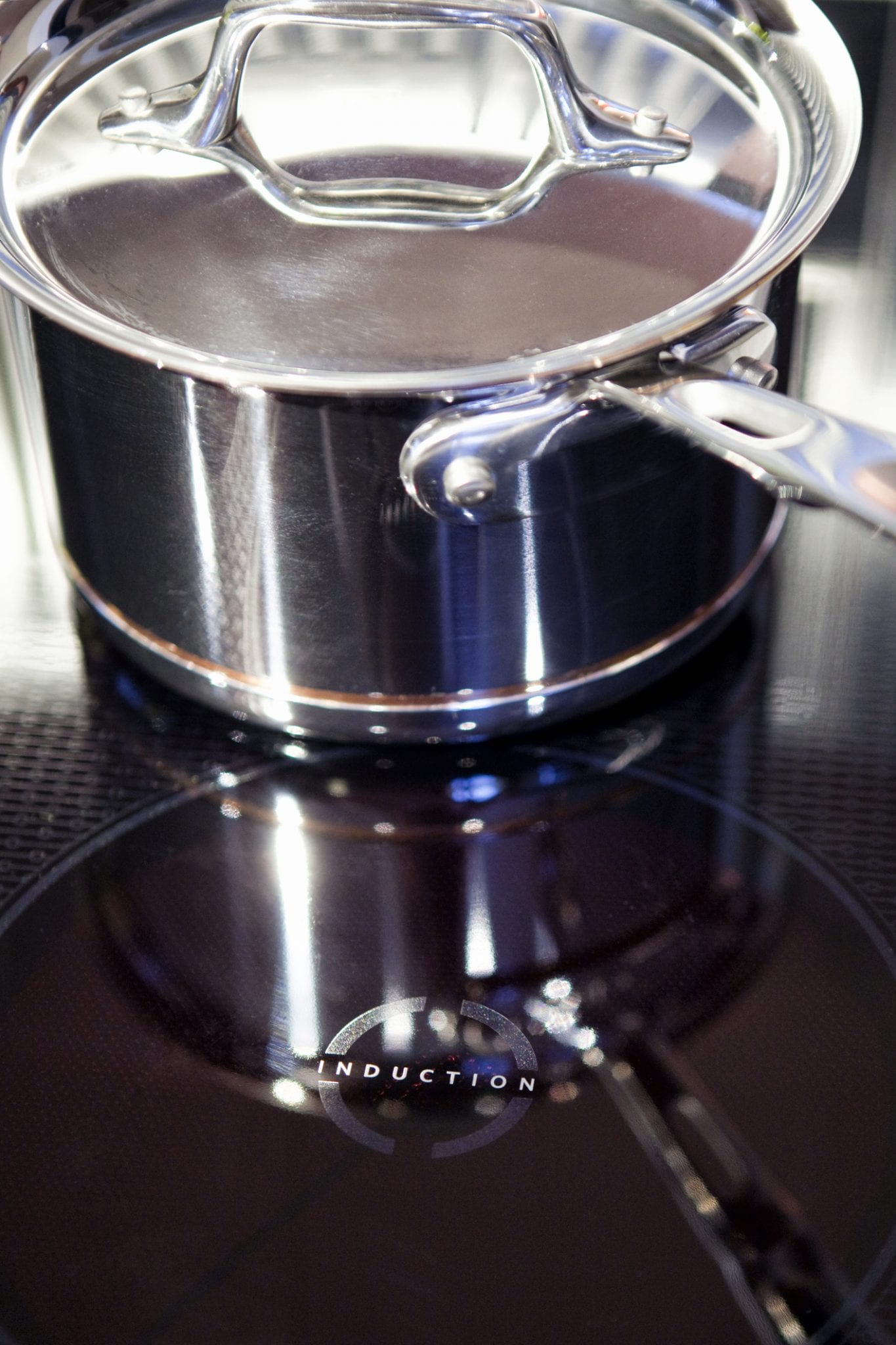
Common applications include:
- Induction hardening and tempering
- Localized heating alters material microstructure to increase hardness and wear resistance in components such as gears, shafts, and bearings.
- Induction melting
- Induction furnaces melt ferrous and non-ferrous metals for casting, alloy development, and specialty materials used in aerospace, medical, and energy industries.
- Brazing, soldering, and welding
- Induction heating enables precise thermal control while limiting heat exposure to surrounding components.
- Composite bonding and curing
- Advanced materials, including carbon-fiber composites, can be bonded using induction heating to activate adhesives or cure resins.
- Continuous tube and pipe welding
- High-frequency induction systems allow steel strip to be formed and welded into pipe at high production speeds.
Induction Cap Sealing in Pharmaceutical Packaging
Induction heating also plays a critical role in consumer and pharmaceutical packaging. The widespread use of tamper-evident seals in over-the-counter medications relies on induction cap sealing technology.
In this process, an aluminum foil liner inside a bottle cap is exposed to an induction field as the sealed container passes beneath the coil. Eddy currents heat the foil, activating an adhesive layer that bonds the liner to the container rim, creating a hermetic seal.
This process must be precisely controlled to ensure:
- Consistent seal strength
- High throughput on automated packaging lines
- Compatibility with different container geometries and materials
Coil design, power levels, and heating uniformity all play key roles in system performance.
Why Coil Design Matters
The efficiency and performance of an induction heating system depend heavily on the design of the induction coil. Coil geometry influences:
- Magnetic field distribution
- Energy transfer efficiency
- Heating uniformity
- Power consumption
Designers must consider coil size, spacing, current density, cooling requirements, and electromagnetic coupling with the workpiece.
Custom conductor geometries—such as round, square, or rectangular profiles—can significantly improve magnetic coupling and power density within the coil.
The Role of Litz Wire in Induction Heating
Induction systems often operate at elevated frequencies where conventional conductors experience significant AC losses.
Two electromagnetic effects are responsible:
Skin effect:
At higher frequencies, electrical current tends to flow near the surface of a conductor, effectively reducing the available cross-sectional area.
Proximity effect:
Magnetic fields from adjacent conductors distort current distribution, increasing AC resistance and heat generation.
These effects can dramatically reduce coil efficiency.
Litz wire addresses these challenges by using many individually insulated strands woven in a carefully controlled pattern. This construction equalizes current distribution across the conductor and significantly reduces AC resistance.
Benefits include:
- Improved electrical efficiency
- Reduced coil heating
- Higher operating frequencies
- More compact coil designs
For induction heating equipment designers, Litz wire enables greater flexibility in system architecture while improving overall performance.
Designing for Application-Specific Performance
Induction heating systems are rarely one-size-fits-all solutions. Coil conductors must be optimized based on numerous design variables, including:
- Operating frequency
- Current density
- Thermal environment
- Required insulation temperature rating
- Voltage stresses
- Mechanical durability
For example, an induction furnace used to heat large metal batches must tolerate far higher ambient temperatures than a compact pharmaceutical cap sealer. Proper conductor selection, including strand diameter, insulation system, and conductor count, is essential to achieving reliable operation.
Custom-engineered Litz wire allows designers to tailor coil performance to the exact electrical and thermal requirements of the application.