
Medical Robotics in Modern Healthcare
Medical robotics has evolved from experimental research into a critical component of modern healthcare systems. Today, robotic technologies assist surgeons in complex procedures, automate pharmaceutical preparation, support remote patient care, and restore mobility to individuals with neurological injuries or limb loss.
Advances in artificial intelligence, precision motion control, sensor technology, and miniaturized electronics have dramatically expanded the capabilities of medical robotic systems. These technologies allow robots to perform highly controlled movements, gather detailed physiological data, and interact safely with patients and clinicians.
Robotic platforms now support applications including:
- Robot-assisted minimally invasive surgery
- Telepresence and remote diagnostics
- Automated pharmacy compounding and dispensing
- Rehabilitation robotics
- Advanced prosthetic limbs and mobility exoskeletons
Together, these technologies are improving clinical outcomes while helping address growing global demands for healthcare services.
A Brief History of Prosthetic Technology
Humans have used prosthetic devices for thousands of years. Archaeological discoveries show that prostheses were already being developed in ancient civilizations. A wood-and-leather artificial toe discovered near Thebes in Egypt, dating to before 600 BCE, is believed to have helped its wearer maintain balance while walking. Similar early devices, including the Greville Chester toe now housed in the British Museum, demonstrate that functional prosthetics existed long before modern medicine.
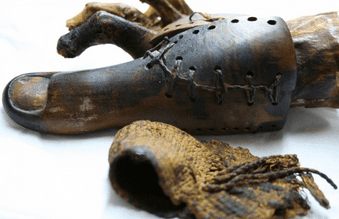
Later examples include the Capua leg, a bronze-and-wood prosthetic from approximately 300 BCE discovered in Italy. Historical accounts also describe Roman soldiers using artificial limbs, such as iron hands designed to hold shields in battle.
For centuries, prosthetic technology advanced slowly. Early devices typically consisted of simple hooks, peg legs, or mechanical limbs driven by springs and cables. Significant improvements in materials and mechanical design began appearing during the Renaissance, including the articulated iron prosthetic hands developed for German knight Götz von Berlichingen in the early 16th century.
Modern prosthetic devices, however, are fundamentally different. Microprocessors, sensors, robotics, and advanced materials now allow prosthetic limbs to replicate complex movements and provide a far more natural user experience.
Robotic Exoskeletons: Restoring Human Mobility
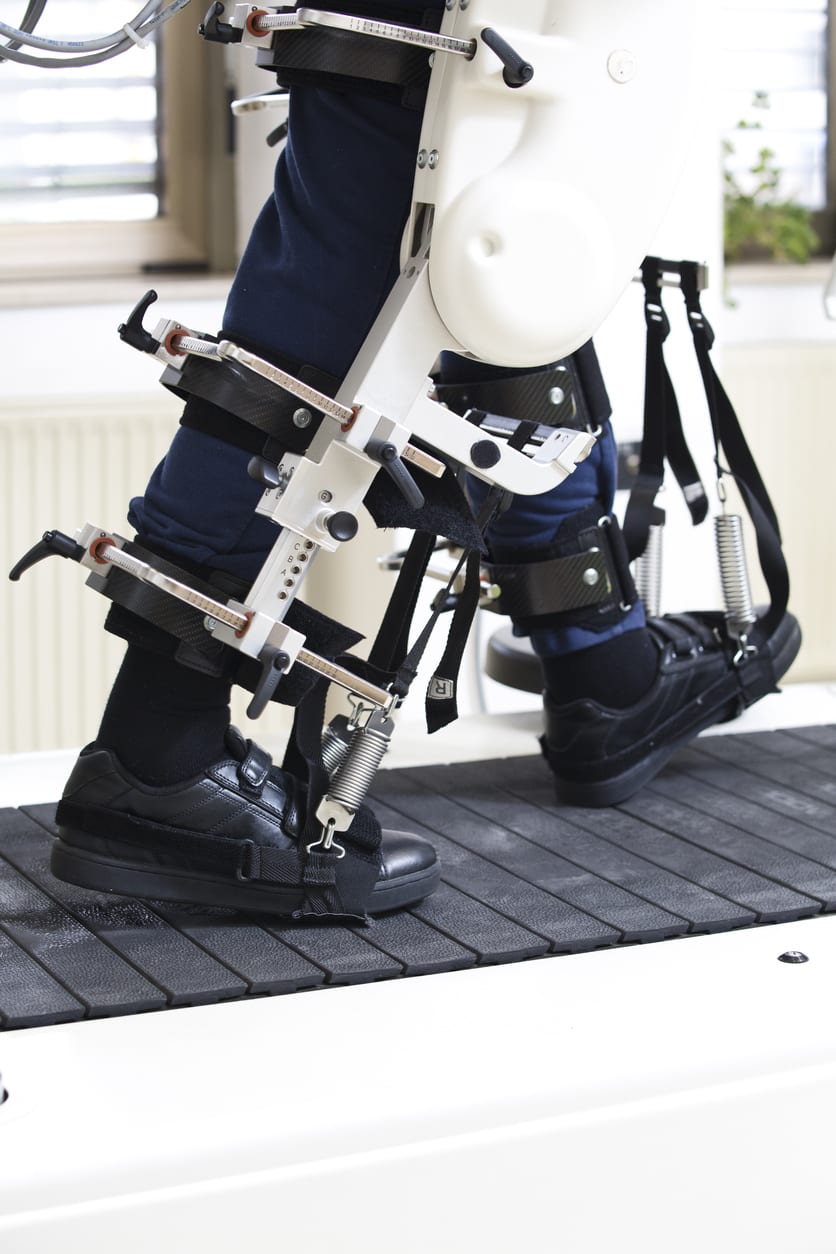
Medical exoskeleton technology has progressed rapidly in recent decades, particularly in rehabilitation and mobility assistance.
Rehabilitation exoskeletons are designed to help patients regain strength and coordination following neurological injury, spinal cord damage, or stroke. These systems guide limbs through precise movement patterns during therapy sessions. Because the robotic system can repeat identical movements thousands of times with high accuracy, patients can perform significantly more rehabilitation exercises than would be possible through manual therapy alone.
Therapists can adjust the level of assistance provided by the exoskeleton as patients regain strength and control. Modern systems also record detailed movement data, enabling clinicians to track progress and refine treatment plans.
In addition to rehabilitation devices, wearable mobility exoskeletons are now enabling individuals with lower-limb paralysis to stand and walk with assistance. These systems typically include powered joints at the hip and knee, controlled by onboard processors and sensor arrays that detect shifts in body weight and user intent.
When a user shifts their center of gravity, the control system initiates a step, producing a gait pattern designed to mimic natural human locomotion. Improvements in lightweight structural materials, compact electric actuators, and advanced battery systems have made these devices increasingly practical for everyday use.
Advances in Robotic Prosthetics
Modern prosthetic limbs increasingly incorporate robotics, advanced sensors, and artificial intelligence to deliver more natural movement and improved functionality.
One major advancement is the development of myoelectric prostheses, which translate electrical signals generated by the user’s muscles into control commands for the prosthetic limb. Sensors placed on the skin detect muscle activity and convert those signals into movements such as gripping, lifting, or rotating the wrist.
More advanced systems integrate multiple sensors that measure pressure, position, and motion. Some research devices even incorporate soft robotics technologies, enabling prosthetic hands to grasp delicate objects with variable force control.
Recent developments also include neural interface technologies, where signals from peripheral nerves or implanted electrodes are used to control prosthetic limbs with greater precision.
Wireless connectivity has further expanded prosthetic capabilities. Bluetooth-enabled prosthetic legs, for example, can synchronize movement patterns and adjust stride dynamics in real time. Software updates and mobile applications allow clinicians to fine-tune device performance for individual patients.
Materials, Electronics, and Manufacturing Innovations
The rapid progress in medical robotics has been driven by advances across several engineering disciplines.
Modern prosthetic and exoskeleton systems benefit from:
- Lightweight composite materials and titanium structures
- High-efficiency brushless motors and compact actuators
- Embedded microprocessors and real-time control systems
- Miniaturized sensors and force feedback technologies
- Computer-aided design and additive manufacturing
These technologies enable devices that are lighter, stronger, and better tailored to individual patient anatomy.
Custom-fit prosthetic sockets, for example, can now be produced using digital scanning and advanced manufacturing techniques. This allows devices to be optimized for patients ranging from young athletes recovering from traumatic injury to elderly individuals regaining mobility after stroke.
The Role of Interconnect and Cable Design
Medical robotic systems rely on highly reliable electrical interconnects to link sensors, actuators, power systems, and control electronics. These connections must perform consistently despite repeated movement, vibration, and environmental exposure.
In prosthetic and exoskeleton applications, cables may experience thousands of flex cycles each day. Designers must consider:
- Flex life and fatigue resistance
- Miniaturization and weight reduction
- Signal integrity for sensors and communication systems
- Biocompatible insulation materials
Specialized cable constructions can support both mechanical durability and electrical performance, ensuring reliable operation throughout the life of the device.
A Rapidly Advancing Field
Medical robotics continues to advance at a remarkable pace. Innovations in artificial intelligence, sensor technology, and human-machine interfaces are expanding the capabilities of robotic systems across healthcare.
As these technologies mature, robotic devices are expected to play an even greater role in surgery, rehabilitation, mobility assistance, and patient care—helping restore independence and improve quality of life for millions of people worldwide.
Medical robotics is no longer experimental. It is becoming a core technology shaping the future of healthcare.